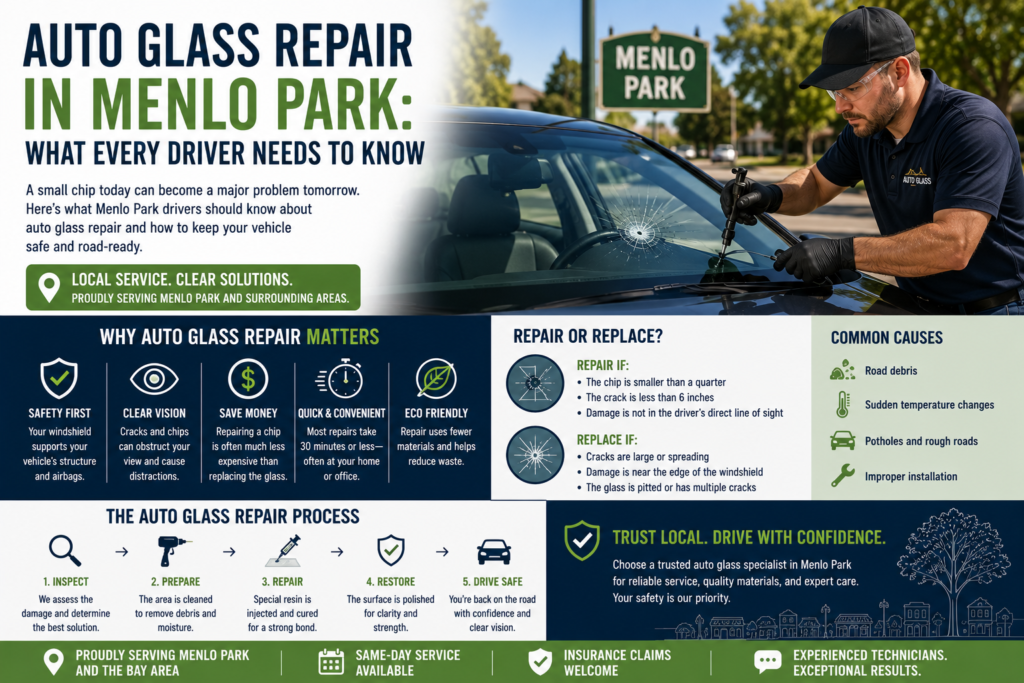
Menlo Park occupies a unique position at the heart of Silicon Valley, where commuters travel the 101 freeway corridor and El Camino Real daily, and where some of the world’s most technologically sophisticated vehicles share the road. For residents of this innovation-focused community, understanding Auto Glass Repair Menlo Park including its technical dimensions and the growing complexity introduced by modern vehicle safety systems is increasingly relevant.
The Physics of Windshield Damage
Understanding why windshields crack and chip the way they do is useful for any Menlo Park driver. Windshields are laminated glass, meaning they consist of two glass layers bonded by a plastic interlayer (PVB). When a rock or road debris strikes the surface, the energy is absorbed by the outer glass layer, which may chip or crack, while the PVB layer and inner glass remain intact, preventing the object from entering the vehicle. The size, velocity, and angle of the impacting object all influence what type of damage results. Cracks that reach the edge of the windshield are particularly serious because they compromise the seal and structural integrity of the glass.
Types of Windshield Damage and What They Mean
Menlo Park drivers should be familiar with the main types of windshield damage. A bullseye chip is a circular break where a cone-shaped piece of glass is displaced at the point of impact these are among the most repairable types of damage. A star break has cracks radiating outward like the points of a star and can often be repaired if caught early. A combination break features elements of multiple damage types and may or may not be repairable depending on size and location. A floater crack appears away from the glass edge, often caused by thermal stress or a pre-existing weak point. An edge crack begins within two inches of the windshield edge and almost always requires replacement.
Silicon Valley Commuting and Windshield Hazard Risk
Highway 101 through Menlo Park is one of the Bay Area’s busiest commuter corridors. Truck traffic, construction projects, and the general density of vehicles create significant windshield hazard risk from road debris. Gravel spills from construction trucks and debris from vehicle tire blowouts are particularly common hazard sources on Bay Area freeways. The good news is that chip repair technology is now advanced enough to address most minor damage before it becomes a costly replacement issue provided drivers act quickly when damage is noticed.
ADAS Technology and Windshield Complexity in Tech-Heavy Menlo Park
Given Menlo Park’s position as a hub for technology companies and early adopters, many residents drive vehicles equipped with advanced ADAS features. Tesla vehicles, in particular, are common in the area and feature cameras mounted near the rearview mirror that are integral to their Autopilot and Full Self-Driving systems. When the windshield of any such vehicle is replaced, the camera must be recalibrated a process that requires specific software, specialized targets, and precise measurements. Without recalibration, features like automatic emergency braking, lane centering, and traffic sign recognition may malfunction.
Acoustic Glass: An Increasingly Common Feature
Many premium vehicles including brands like BMW, Mercedes-Benz, Lexus, and Tesla now use acoustic glass (also called acoustic interlayer glass) in their windshields. This glass includes an additional acoustic dampening layer within the PVB interlayer, designed to reduce road and wind noise inside the cabin. When replacing acoustic windshields, it’s important that the same type of glass is used. Installing a standard laminated windshield in a vehicle designed for acoustic glass eliminates the noise reduction benefit and may not provide the same optical quality.
Rain Sensors and Heated Windshields
Beyond cameras, modern windshields often contain additional technology. Rain-sensing windshields have a photoelectric sensor bonded to the inner glass that detects moisture and automatically activates the wipers. Heated windshields include a series of fine heating elements embedded in the glass to defrost or demist the surface quickly. Both of these features must be considered when replacing a windshield, as replacement glass must include the appropriate connectors, sensors, or heating elements to maintain these functions.
How Long After Repair Can You Drive?
After a chip repair, the cured resin reaches full strength immediately, and vehicles can typically be driven right away. After a full windshield replacement, the urethane adhesive needs time to cure to a safe minimum drive-away strength. Most technicians recommend waiting at least one to two hours in normal temperature conditions before driving. Avoiding car washes, hard door slamming, and placing items against the windshield for 24 hours after replacement helps ensure the adhesive cures properly and the windshield sets in the correct position.
Keeping Your Windshield in Good Condition
Preventive care can extend the life of auto glass significantly. Avoiding abrasive windshield cleaners preserves the glass surface. Using properly maintained wiper blades prevents fine scratches from worn rubber. Parking in shade or using a windshield sunshade reduces thermal stress on the glass. Maintaining a safe following distance on highways reduces exposure to debris kicked up by the vehicle ahead. Addressing chips immediately before moisture and debris can work their way into the damage is the single most effective way to avoid chip-to-crack progression.
Conclusion
Auto glass repair in Menlo Park encompasses a growing range of technical considerations, from basic chip repair to complex ADAS recalibration and acoustic glass replacement. For residents of this innovation-centric community, working with technicians who are current with vehicle technology is as important as getting the glass itself right.