Every business that still runs analog phone lines is quietly paying for a technology from another era. As line rentals rise and copper networks age, more Pakistani offices are asking the same question in 2026: should we finally move to VoIP? Switching from analog to an IP Phone system is one of the highest-return upgrades a growing company can make, cutting call costs, adding features, and scaling without new cabling for every extension.
This guide walks through the practical differences between analog and VoIP telephony, what an office deployment actually involves, and how to migrate without disrupting business. We have transitioned offices from dusty PBX cabinets to clean IP-PBX platforms, and the pattern is always the same — the technology is the easy part; planning the change well is what makes it painless.
Analog vs VoIP: What Actually Changes for Your Office
Analog phones send voice as an electrical signal over dedicated copper pairs. Every phone needs its own line or a port on a physical PBX, and adding a desk means running new wire. Features like conferencing, call recording, and voicemail-to-email are either expensive add-ons or simply unavailable.
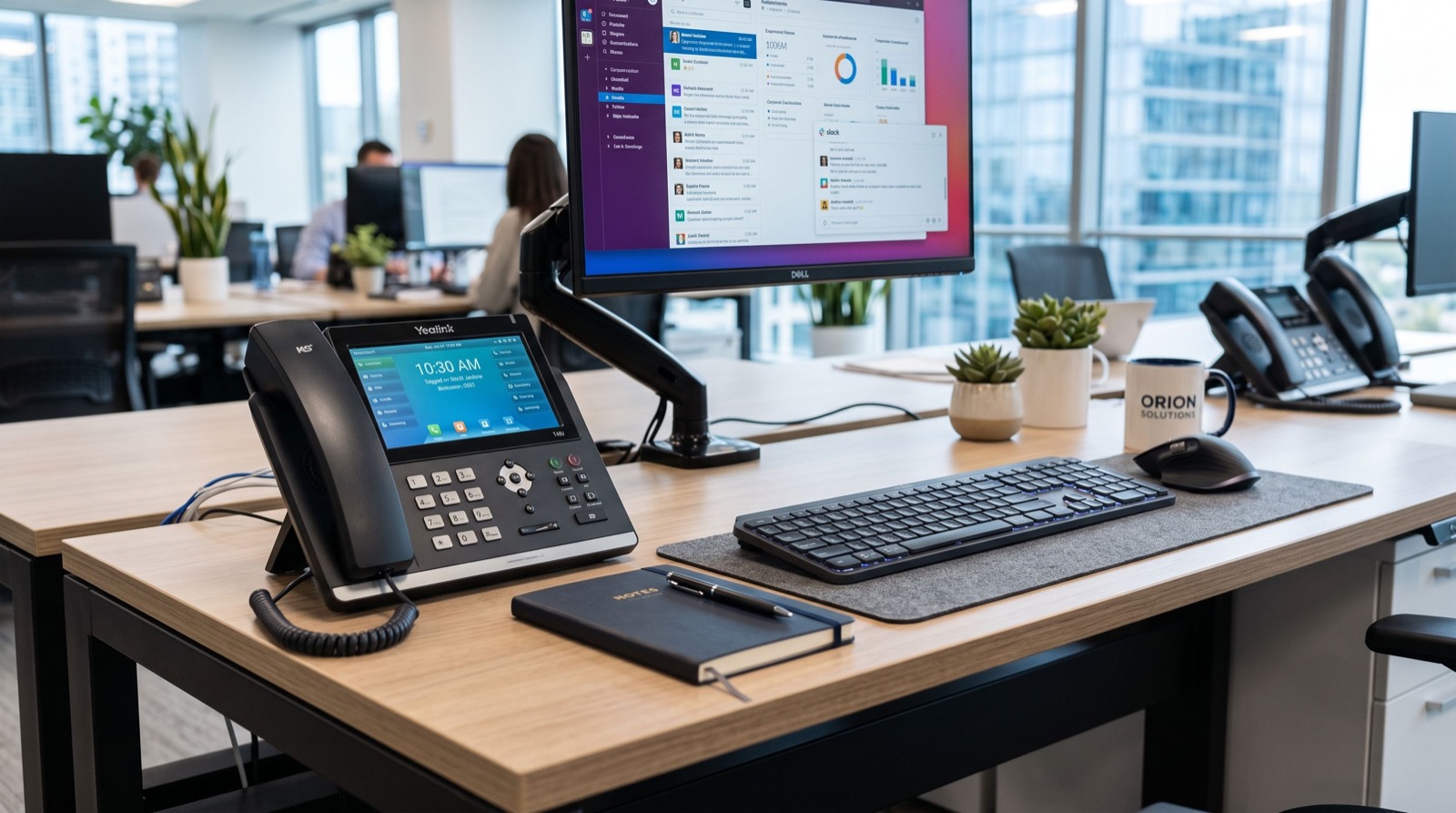
VoIP converts voice into data packets that travel over your existing network and the internet. A single Ethernet drop can carry a call and a computer’s traffic, and you provision new extensions in software rather than with a screwdriver. Choosing quality hardware — a reliable IP Phone / IP Phones range built to SIP standards — is what turns that theory into clear, dependable calls.
The Concrete Benefits Businesses Notice First
- Lower call costs — internal calls are free, and SIP trunks slash long-distance charges.
- Easy scaling — add or move extensions in software, not with new cabling.
- Rich features — voicemail-to-email, call queues, IVR menus, and recording come standard.
- Remote work — softphones and roaming handsets keep staff reachable anywhere.
- One network — voice and data share the same infrastructure, simplifying management.
How Does a VoIP Office Deployment Work?
A modern deployment centres on an IP-PBX — software such as 3CX, FreePBX, or Issabel running on a server or in the cloud. This platform manages extensions, routing, voicemail, and connects to the outside world through a SIP trunk from a telecom provider. Your desk phones and softphones register to the PBX and become extensions.
For fixed desks, a dependable entry-level handset like the Fanvil W610W covers roaming staff, while wired models anchor reception and finance. The beauty of this architecture is that every device speaks the same standard, so you can mix hardware freely and swap providers later without ripping anything out.
A Step-by-Step Migration Plan
- Audit the network — check bandwidth, switches, and whether PoE is available.
- Choose the PBX — decide between on-premise and cloud based on control and budget.
- Select a SIP trunk — pick a provider with local numbers and good uptime.
- Map extensions — plan numbering, ring groups, IVR menus, and voicemail.
- Provision phones — configure handsets from a template and label them.
- Run in parallel — keep analog live briefly, test everything, then cut over.
Cost, Quality, and Reliability Compared
The table below summarises how the two approaches stack up on the factors that decide most upgrade projects. The gap widens as your headcount grows, which is why scaling businesses feel the pain of analog most.
| Factor | Analog / legacy PBX | VoIP / IP-PBX |
|---|---|---|
| Adding an extension | New wiring + port | Software change |
| Call cost | Per-line rental + tariffs | Free internal, cheap trunks |
| Advanced features | Costly or unavailable | Built in (IVR, queues, recording) |
| Remote workers | Not supported | Softphones & mobile apps |
| Audio quality | Narrowband | HD wideband |
| Scalability | Limited by hardware | Grows with the network |
Getting Call Quality Right on Your Network
VoIP only sounds bad when the network is neglected. Voice packets are sensitive to jitter and latency, so a dedicated voice VLAN and Quality of Service (QoS) rules that prioritise call traffic make the difference between crystal-clear conversations and choppy audio. Adequate upstream bandwidth for your expected concurrent calls is equally essential.
This is where planning matters most. Bringing in dependable specialists to size bandwidth, configure QoS, and stress-test the system before go-live prevents the “our VoIP is unreliable” complaints that almost always trace back to network configuration rather than the phones themselves.
Why Standards Compliance Protects Your Investment
Modern IP phones and PBX platforms communicate using SIP, the open protocol defined in IETF RFC 3261. Sticking to standards-based equipment means you are never locked to one manufacturer or trunk provider — you can migrate to the cloud, change carriers, or mix vendors as your needs evolve.
For a business planning to grow through 2026 and beyond, that freedom is the real prize. You buy hardware once, and it keeps working as your platform and providers change around it.
Practical Tips Before You Switch
- Keep analog running in parallel during cutover as a safety net.
- Back up your PBX configuration and document the extension map.
- Add a UPS so the PBX and PoE switch survive load-shedding.
- Train staff on transfers, queues, and voicemail before go-live day.
Frequently Asked Questions
Is VoIP cheaper than analog phone lines?
Usually, yes. VoIP makes internal calls free and dramatically lowers long-distance costs through SIP trunks, while removing per-line rentals. For most growing offices, the monthly savings quickly cover the switch.
Will my VoIP phones work if the internet goes down?
Calls over SIP trunks need internet, but internal calls between IP phones keep working on the local network. Many businesses add a backup connection or mobile failover so critical lines stay reachable.
Can I keep my existing phone numbers when moving to VoIP?
In most cases you can port your existing numbers to a SIP trunk provider, so customers dial the same number while you enjoy VoIP features behind the scenes.
Do I need special phones for a VoIP system?
You need SIP-compatible IP phones or softphones rather than analog handsets. Standards-based models register to any modern IP-PBX and deliver HD audio plus advanced calling features.
Final Thoughts
Moving from analog to a proper IP Phone system is one of the smartest infrastructure decisions a Pakistani business can make in 2026. You gain lower costs, richer features, and the freedom to scale and support remote staff — all on the network you already own. Plan the migration carefully, get your network ready, and choose standards-based hardware, and the transition will feel like an upgrade in every sense.